
Note: these chapters were initially a series of emails, so they read a little weirdly on a single page.
Welcome 👋 👋 👋
Hi! I’m Clarke Ching, and I’m so pleased to share this simple little story that shows how (the rather boring sounding) “bottleneck theory1” can transform something so common and everyday as a family BBQ into a masterclass in bottleneck thinking.
This BBQ story is one of my favourites because it shows how these simple ideas work in real life.
The lessons aren’t theoretical - they’re practical, and you can start using them today.
And while a bottlenecked BBQ might seem simple, these same principles help solve complex problems in hospitals, tech companies, and businesses worldwide.
Also, this story is based on real life.
Let’s get going!
1 - The Crime Scene
Dear Detective,
Once again, our story begins with Billy, young Bottleneck Detective fresh from solving a major bottleneck crime at the Starlight Cinemas, facing his toughest challenge yet: his first Christmas in New Zealand, on the other side of the world where December means sunshine and sizzling BBQs instead of snow and hot cocoa.
The Crime
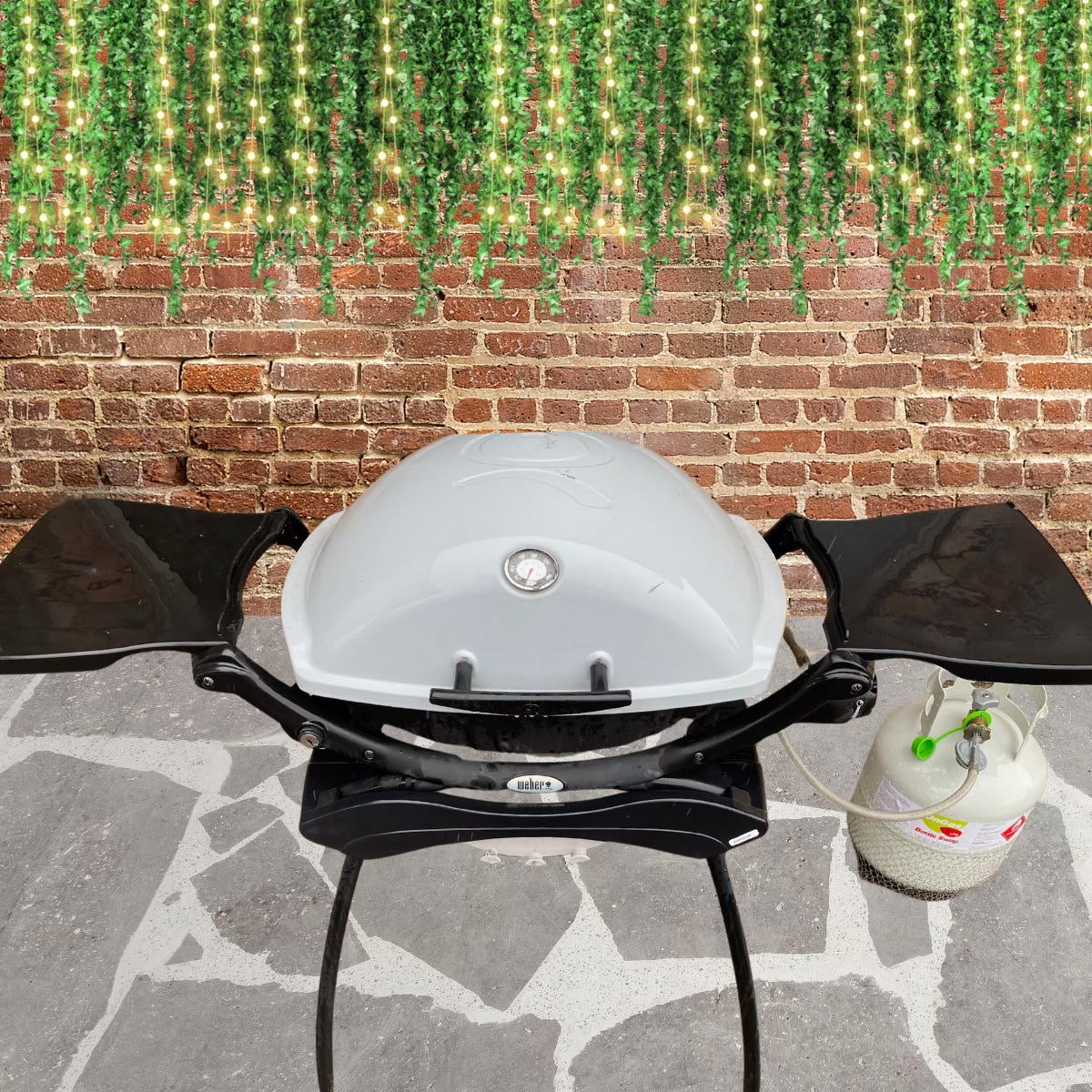
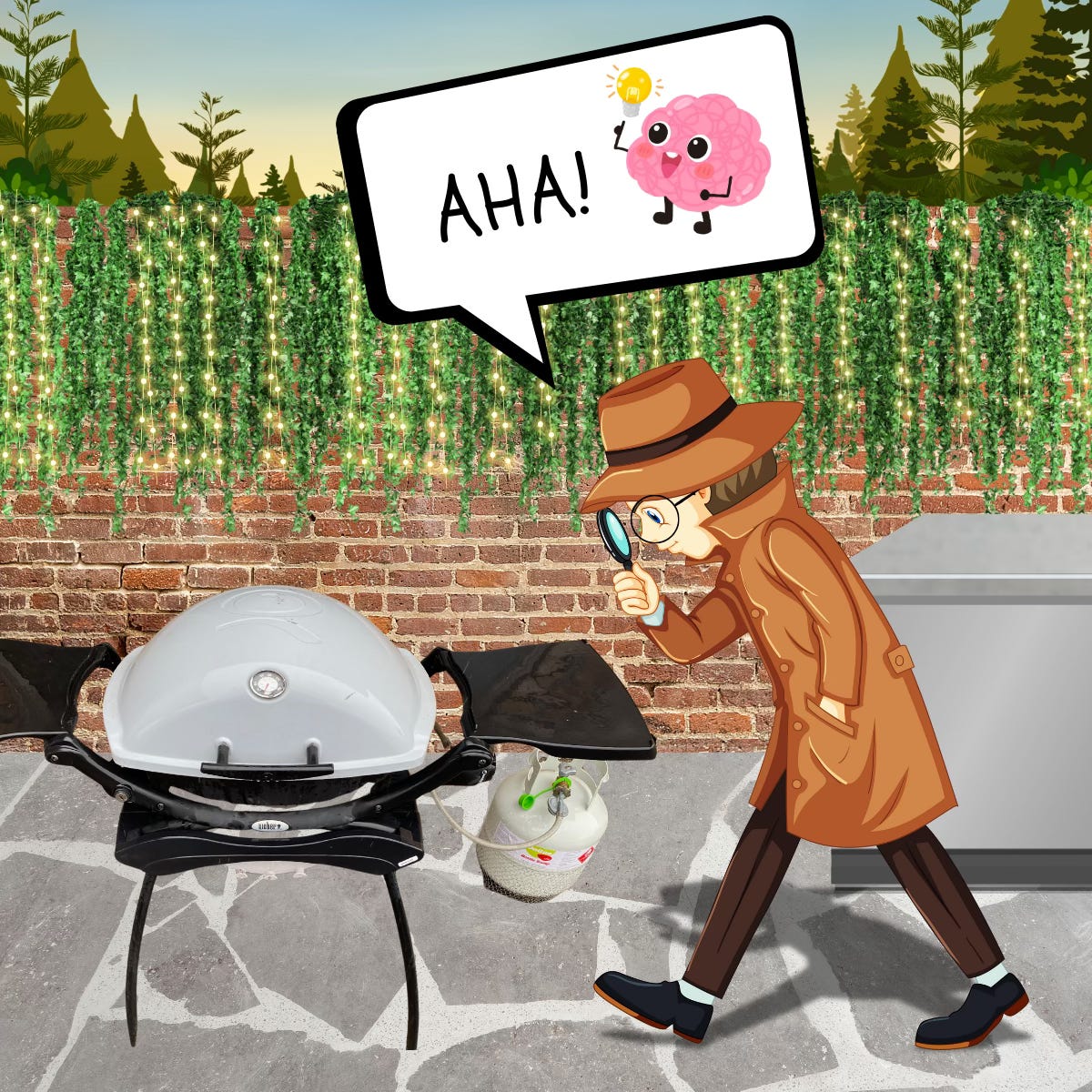
Let’s get straight to the smoking gun: Uncle Pete’s modest Weber BBQ is way too small to feed twenty hungry relatives on Christmas Day.
It’s a classic bottleneck - just like the food counter at the Starlight Cinema - and Billy can already see the queue forming in his mind.
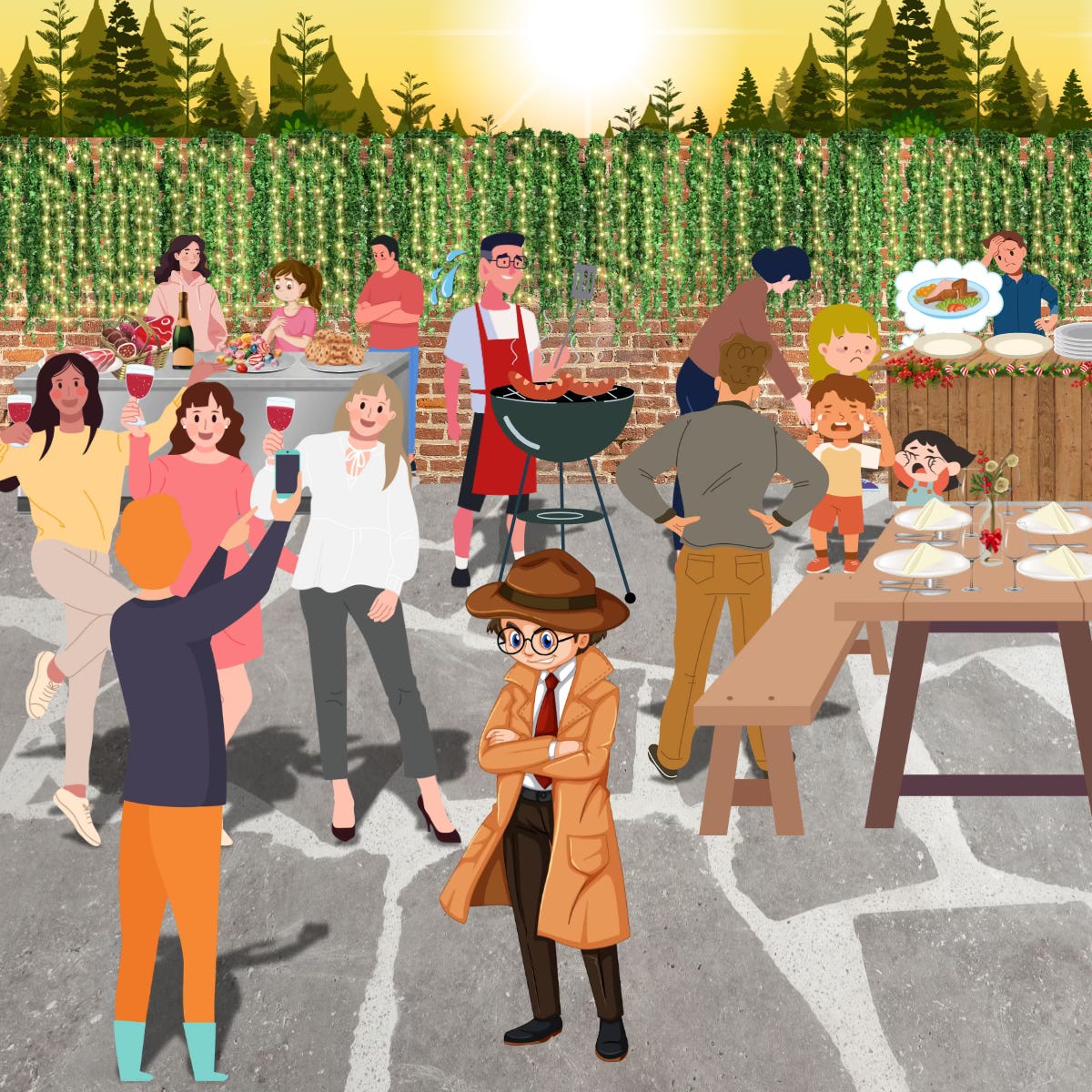
Not a queue of cinema-goers this time, but of increasingly hungry family members waiting... and waiting... and waiting in the hot summer sun while small batches of food slowly make their way off the BBQ.
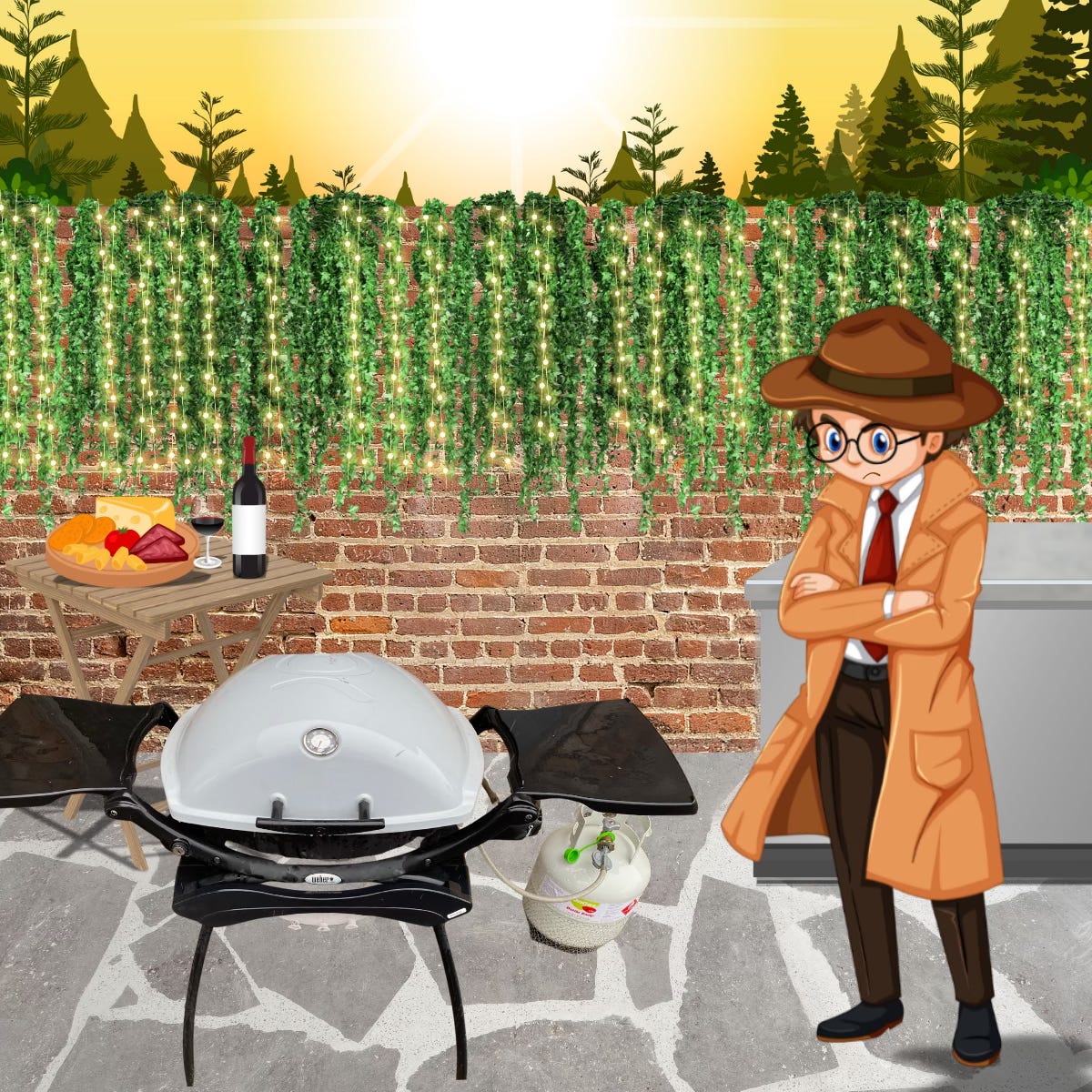
Remember Billy’s catchphrase?
“The Queue is the Clue!”
Well, this queue of hungry relatives is pointing straight to a Christmas crisis in the making.
The queue won’t necessarily be obvious, because everyone will be chatting while they wait, but there will be a queue, and everyone will get hungrier and hungrier as they wait.
With the scorching New Zealand summer sun beating down, kids getting hangrier by the minute, and everyone’s Christmas lunch delayed, this bottleneck threatens to turn festive cheer into festive frustration.
It could be a Christmas to remember - but for all the wrong reasons.
The victim?
Christmas lunch itself. (Bottlenecks don’t take holidays! And they don’t just exist in the workplace - factories, offices, hospitals, cinemas, and so on.)
The suspects?
A too-small grill struggling to keep up with demand, conflicting cooking times that turned simple timing into a puzzle, and a complete lack of coordination that threatened to turn Christmascheer into Christmas chaos.
And the smoking gun?
Well, in this case, it was literally smoking, though it wasn’t a gun.
It was that overwhelmed BBQ Grill, with Uncle Pete trying to juggle steaks, sausages, and kebabs while keeping an eye on increasingly restless relatives.
The steaks were high (groan) - and not just the ones on Pete’s cooking list. With toddlers getting cranky, teenagers eyeing the snacks meant for later, and Pete’s reputation as BBQ master on the line, this was shaping up to be either a Christmas triumph or a yuletide disaster.
The Detective’s Toolkit - FOCCCUS & FBI
Over recent years of cracking bottleneck cases, Billy had refined his approach and he now uses a new tool, called the FBI Loop, alongside the FOCCCUS Formula.
They’re perfect partners - like Starsky and Hutch, Cagney and Lacey, or even Scooby and Shaggy (though with less stumbling into ghosts and more deliberate action!).
You already know about the FOCCCUS formula from The Bottleneck Detective.
FBI stands for:
- Frame: Get real clear about the real problem by putting a frame around it.
- BrainSpark: Let imagination run wild with possible solutions
- Implement (bit by bit): Cherry-pick the best bits and try them until the problem goes away
It’s a loop, or a series of loops, and - in the real world - you’ll find you bounce around a lot between F, B and I.
There’s no need to over think it.
Frame
It’s targeted common sense - that’s why it starts with Frame.

Framing is like a crime scene technician drawing a chalk outline around a body or fencing off the crime scene with police tape.
It helps us solve the right problem and stops us trying to fix everything all at once (or, as Billy would say, trying to boil the ocean!).
Tomorrow, we’ll see how Billy uses both methods to start unraveling this Christmas conundrum. Watch your inbox for the first clues emerging three days before Christmas...
Until then,
Clarke Ching
Chief Detective Instructor
2 - The First Clues Emerge
December 22nd found our young detective at the kitchen table, surrounded by his Kiwi family and his first piece of evidence: Uncle Pete’s hastily scrawled cooking schedule. The paper was covered in crossed-out times and food items, looking more like a crime scene diagram than a Christmas lunch plan.
As Pete tapped his pen against the notepad, Billy’s trained eye caught the telltale signs of a bottleneck in the making.
Billy’s Aunt Liz said, “Something is bugging you Pete. What’s up?”
“You know,” Pete began, his voice carrying that familiar tone Billy had heard so many times before - that tone people get when they instinctively sense a bottleneck - even though they’d never think to call it that - and jump straight to what seems like an obvious solution, “with twenty people coming, we really need a bigger BBQ. That new six-burner model at the hardware store would be perfect...”
Auntie Liz crossed her arms. “Not a chance, Pete. You’re not spending two thousand dollars on a BBQ for one day.”
Pete’s face fell. Secretly he wanted a new BBQ for Christmas, not socks, and his cunning plan had been foiled.
Billy’s eyes lit up. He had some suspects to grill, and none of them were on Pete’s cooking list.
FRAMING THE PROBLEM
“Before we jump to solutions,” Billy said, opening his detective notebook, and writing the word FRAME at the top of the first blank page, “let’s get clear about the real problem. What exactly are we trying to solve?”
“We need a bigger BBQ,” Pete said emphatically.
“Hmm,” said Billy. “That’s a solution - and there may be many solutions. What’s the problem?”
Pete frowned, then thought a bit. “My current BBQ is too small.”
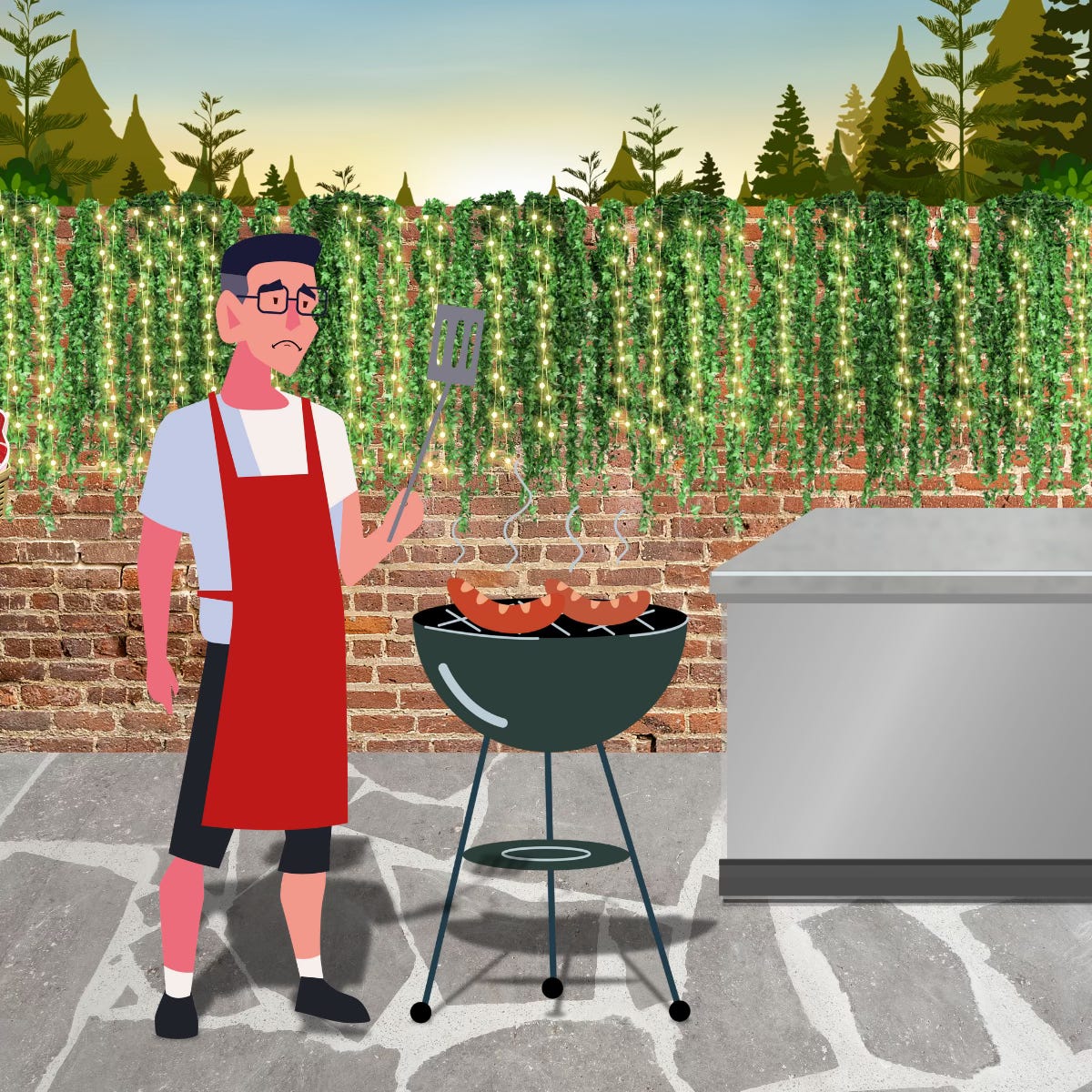
Billy nodded, then started writing in his notebook, speaking as he wrote:
- Resource under pressure (one small BBQ)
- Demand spike (twenty hungry people, not the usual 5 or 6)
- Everything hitting the BBQ at once.
- Hot food needs to reach twenty people without getting cold, in a reasonable time frame.
- Queue forming: hungry people waiting while food cooks in small batches (the clue is in the queues!)
Billy said, “There must be other options - common sense ideas that are free, or cheap..”
Pete and Liz both nodded. Billy knew they liked common sense ideas. They often complained that other people didn’t seem to have any, so it couldn’t be all that common. “More like uncommon sense,” Pete muttered.
Billy said, “And, – since we’ve just FRAMED the problem – this isn’t your everyday version of common sense, it’s targeted, focused common sense.
3- Solutions Start Sizzling!
Dear Detective,
Want to know my favourite part of bottleneck work? It’s watching people discover they already have everything they need to solve their problems. After 30 years of doing this, I still get a kick out of seeing that moment when the lightbulb goes on.
Yesterday, we watched Billy help Uncle Pete frame the real problem. Now it’s time for some creative problem-solving...
Here’s what happened next...
LET THE BRAIN SPARKS FLY
The kitchen was already warm from the summer heat when Billy’s grown-up cousins Karen, Matt and Sam arrived, bringing fresh energy to the detective work. They pulled up chairs around the kitchen table, eager to help solve the Christmas crisis.
Liz bought them up to speed. “We have a problem: the BBQ is too small given how many more people are coming on Christmas Day. It will take too long to cook all the food. And it won’t be a fun day.”
The three siblings nodded.
“Your Dad wants to buy a new BBQ. I said no. Billy wants us to use common sense instead.”
Pete nodded. “Targeted common sense.”
Billy couldn’t help but think back to his first big case at the cinema—spot the clues, dig into the problem, and get everyone thinking together.
He said, “How about we BrainSpark some ideas?”
His family, not used to Billy’s eccentric ways and use of unfamiliar jargon, all made funny faces.
“BrainSpark?” asked Uncle Pete.
“It’s like BrainStorming … but sparkier,” Billy explained, drawing little lightning bolts in the margin of his detective notebook. “We know what the problem is - the BBQ is too small - and now we all just need to spit out a bunch of good ideas - possible solutions - and see what we come up with. Some ideas will spark off each other and they’ll help us come up with newer even sparkier ideas. Every idea is welcome, no matter how crazy. We won’t use every idea.”
Capacity Sparks
Uncle Pete nodded, then looked at Aunty Liz, nervously. “I still like my idea of buying a new BBQ.”
Liz shook her head. “Maybe next year.”
“We could hire some extra BBQs,” Karen suggested.
“Or borrow one,” Matt jumped in. “The neighbours are eating out Christmas Day - bet they’d lend us theirs.”
Curation Sparks
“Maybe we all become vegetarians?” Pete joked, but nobody laughed.
“Actually,” Liz said, warming to the idea, “we should do more salads. We usually roast a few vegetables on the BBQ, but fresh salads would free up BBQ space - and they’ll be nice in this heat.”
Coordination and Timing Sparks
“What about the timing?” Matt asked. “Does everything need to be cooked at once?”
“We could start cooking earlier in the day, and finish later than normal,” Pete suggested. “Keep the cooked stuff warm in the oven. Though that does take a lot of the joy out of grilling. Turns it into work.”
Cooking and Curation Sparks
Matt’s eyes lit up. “What if we pre-cooked the sausages first? My friend Julia’s Mum always boils them, so they’re cooked, then her Dad just browns them up on the BBQ. Takes way less BBQ time.”
Pete looked skeptical. “Pre-cook? Isn’t that cheating?”
Matt said, “Maybe, Dad, but they taste nice.”
“That’s clever,” Karen said, getting excited. “And I’ve got an old crockpot in my apartment. I could slow cook some pork overnight. Free up even more BBQ time later on.”
“Do you think I should do a glazed ham?” Liz asked. “Doesn’t need the BBQ at all, and it’s delicious cold.”
Pete said, “I love glazed ham.”
Flow and Family Sparks!
“And while we’re thinking about how changing the timing,” Sam chimed in, “the kids could all eat first, before the adults.
“I could lay out picnic blankets for them,” Liz suggested, make it into a Christmas picnic for them.
Pete’s eyes lit up. “The kids would love that - something a bit different. But, we’d need to put out nibbles for the adults so nobody gets hangry waiting their turn.”
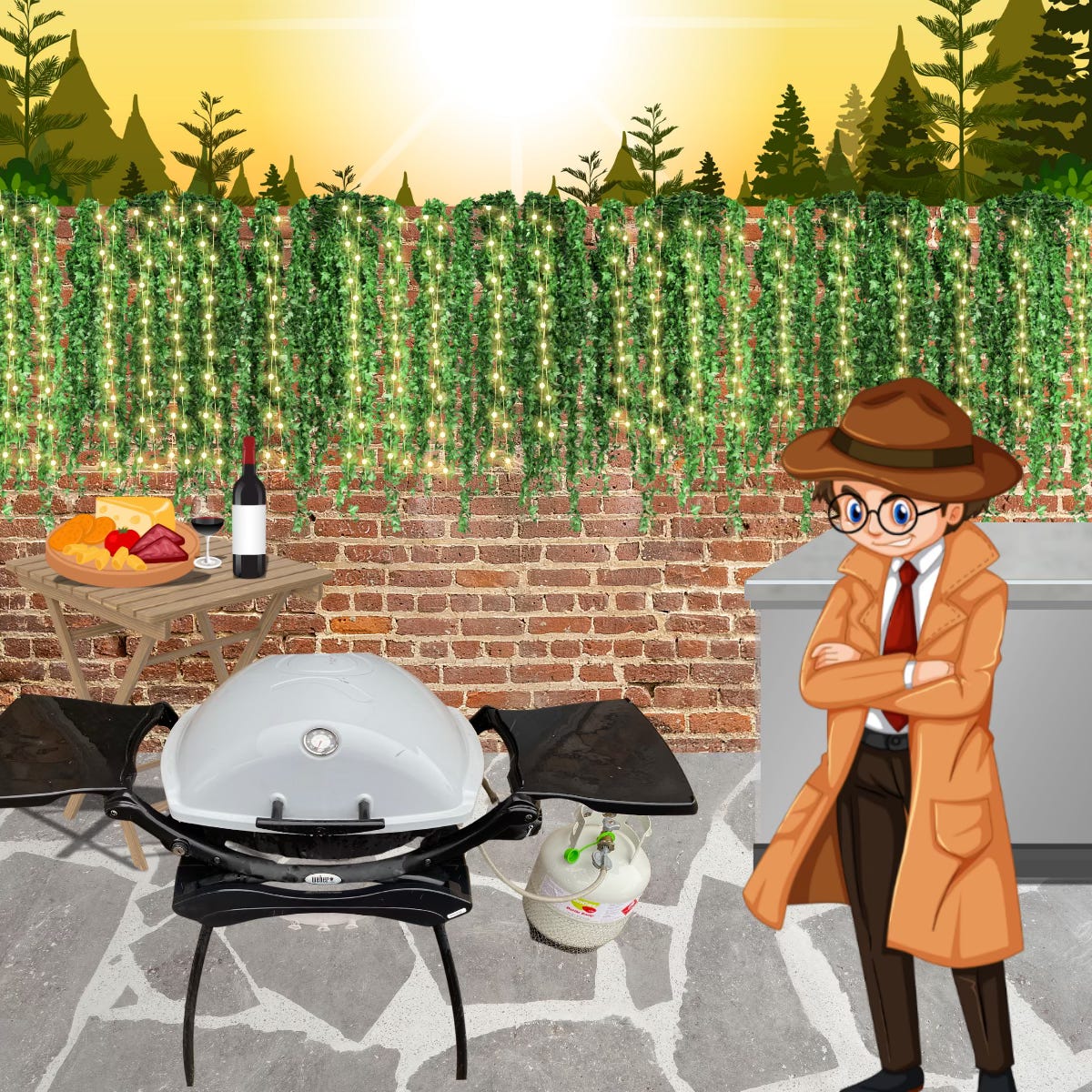
Karen said, “Yeah. We could ask the cousins to bring the snacks. They don’t need to cook anything, they can just buy them pre-made from the supermarket. Suits their style.”
“Why don’t we make it more of a potluck?” Karen suggested, building on the collaborative food-sharing theme. “Jenny makes amazing pavlova, and Sarah’s chocolate sponge is legendary.”
What had started as a simple capacity problem had grown into a feast of solutions: from borrowing BBQs and pre-cooking, to clever timing shifts and making the whole day more relaxed. Each idea sparked another, until they had more options than they needed.
Billy watched the ideas spark and bounce around the kitchen, each suggestion igniting the next.
Just like at the Starlight Cinema, once people started thinking differently about the problem, solutions didn’t just appear, they multiplied.
A ham led to thoughts of cold cuts, potluck suggestions sparked ideas about favourite family recipes, and the picnic blanket idea got everyone thinking about making the day more relaxed and casual.
They didn’t need to use every idea - that would have been like trying to boil the ocean.
Instead, they cherry-picked the best bits that improved their flow: pre-cooking the sausages, using Karen’s crockpot, setting up the kids’ picnic zone, and borrowing just one extra BBQ.
Simple changes that would work together to solve their bottleneck.
“You know what’s clever about this?” Pete said, warming to the plan despite his initial skepticism. “We’re not just cooking smarter or adding capacity - we’re cooking up solutions together. I love that!”
Billy smiled, recognizing how they’d naturally discovered multiple ways to address their bottleneck - through better coordination, collaboration, and curation of what went on the BBQ.
Tomorrow: Watch how the battle plan unfolds under the hot Christmas sun...
Until then,
Clarke Ching
Chief Detective Instructor
P.S. Notice how the BrainSpark session generated waaaayyyyy more ideas than they needed? That’s the beauty of detective work—just like Billy learned at the cinema, when you explore lots of options, you’re more likely to find a winning solution.
5 - THE CHRISTMAS DAY BATTLE PLAN
The Morning Sparks
Christmas morning dawned bright and clear - perfect BBQ weather, with cicadas already singing in the pohutukawa trees and the promise of summer heat in the air.
The operation swung into action like a well-oiled machine:
The morning prep went smoothly - sausages pre-cooked, the crockpot did its magic overnight, picnic blankets laid out under the pohutukawa tree (New Zealand’s Christmas tree, covered in bright red flowers).
Every spark of inspiration from yesterday’s planning came together smoothly. As guests arrived, the pre-made snacks kept everyone happy while Pete’s BBQ worked its magic.
The Flow Sparks
The staggered serving was a masterstroke: kids happily eating first at their special picnic spot, adults enjoying snacks and conversation, and Pete finally free to focus on grilling those steaks to perfection.
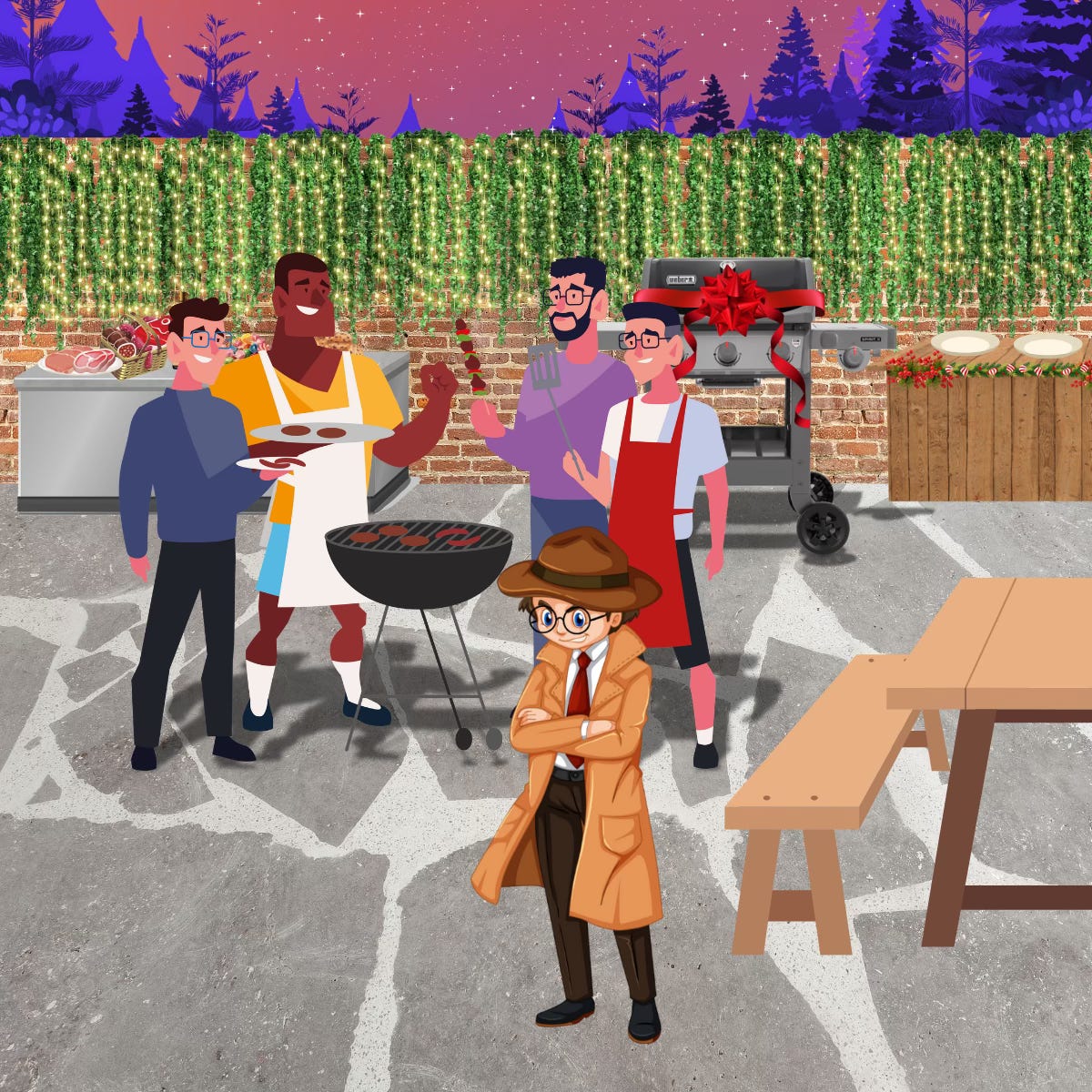
By early afternoon, twenty satisfied people were scattered across chairs and picnic blankets, every plate full, not a bottleneck in sight.
(And their neighbours BBQ? They borrowed it, but didn’t use it. They didn’t need to. And, guess what? They cooked too many sausages. But no one complained.)
6 - The Real Christmas Present
As the sun began to set on their successful Christmas Day, there was one final surprise. While Pete packed away the last of the chairs, the family had one last gift to reveal - that six-burner BBQ he’d been eyeing, complete with an enormous red bow.
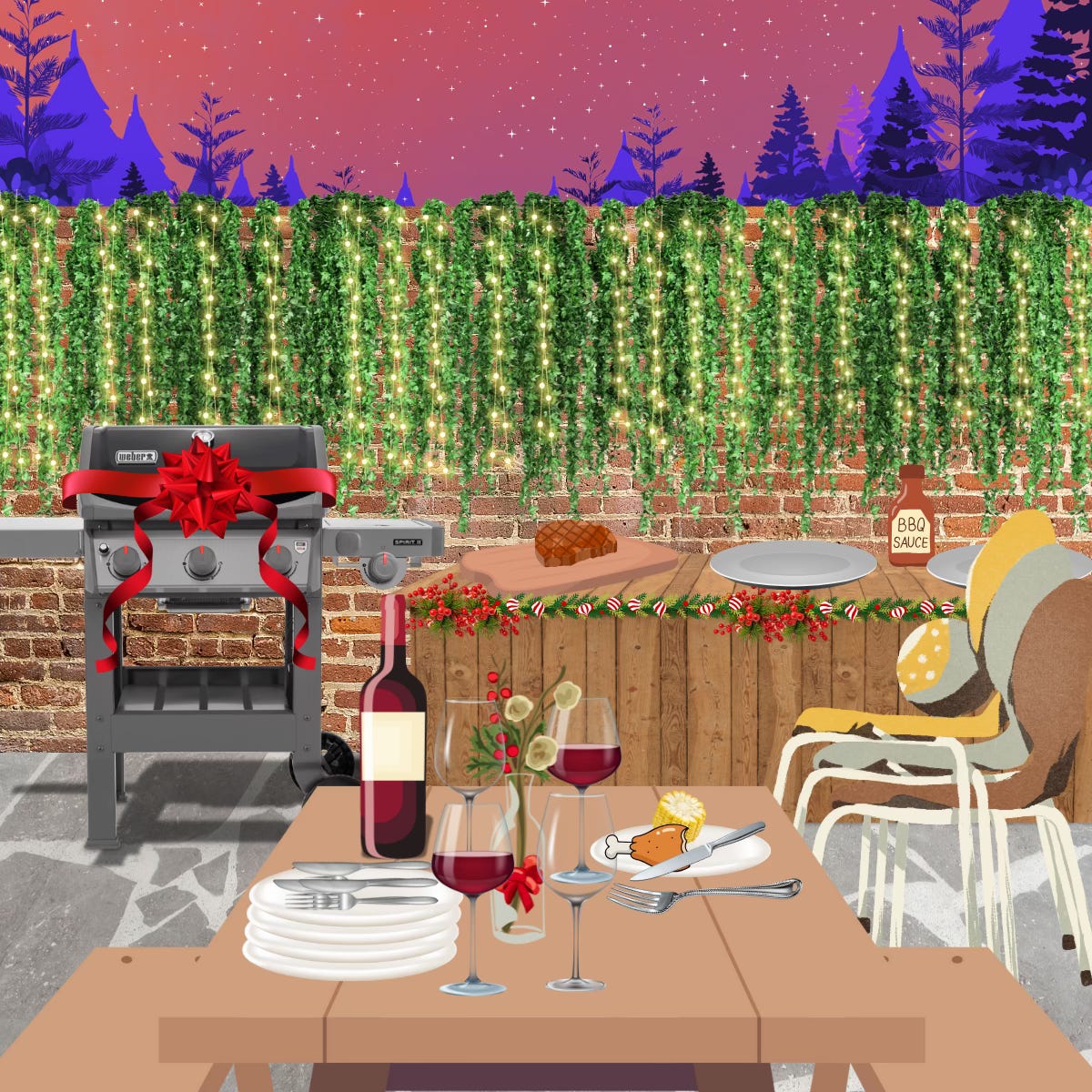
“But... but...” Pete stammered. “You said...”
“Of course I said no when you asked,” Liz laughed. “Couldn’t spoil the surprise, could we?”
“We all chipped in,” Matt explained. “Been planning it for months.”
Billy watched the scene unfold, his detective’s mind noting something interesting. The day’s success hadn’t come from having a bigger BBQ - it had come from everyone working together, combining resources, sharing ideas. Like that old story about stone soup, where a village creates a feast from nothing just by collaborating.
“You know what’s funny?” Pete said later, still beaming as he ran his hands over his shiny new BBQ. “Today was perfect with the old Weber.”
“Because now we know it’s not just about the BBQ,” Billy said. “It’s about how we all work together. Sometimes the bottleneck isn’t in the equipment - it’s in how we think about the problem.”
And that smoking gun from three days ago? It had transformed into the sweet, smokey smell of success wafting across the backyard. And somewhere in the gathering dusk of a New Zealand Christmas, a family discovered that sometimes the best solutions come not from having more resources, but from using what you have more cleverly - together.
Until next time,
Clarke Ching
Chief Detective Instructor
P.S. You know what I love most about this case? How it shows that Collaboration - the second C in our FOCCCUS formula - isn’t just about resources working together (like the BBQ, oven, and crockpot did). It’s about people coming together to solve problems in ways they never could alone. That’s the real magic of bottleneck detection. Perhaps that was the real Christmas gift Billy brought with him - not just solving the BBQ bottleneck, but showing his family the joy of working together.
Bottleneck Theory is a subset of the even more boring sounding “Theory of Constraints”, a huge body of work created by Dr Eli Goldratt and popularised in his classic book The Goal.